
Fantasy Cricket Points Calculator & Projection Tool 2026
A free Dream11-style points calculator that scores your custom 100-credit XI, applies captain and vice-captain multipliers, then projects finishing rank for the contest size you're about to enter. Built for IPL 2026, with format toggles for T20 internationals and ODIs.
- Live points table: batting, bowling, fielding, strike-rate and economy bonuses
- Format-aware projection: IPL, T20I and ODI scoring rules
- Venue & weather nudge: ±8% adjustment based on pitch history and dew
Score a XI in three steps
The calculator runs entirely in your browser — no sign-up, no deposit, no spam.
Start by picking the eleven players you intend to submit. The calculator pulls each player's projected role (top-order bat, middle-overs anchor, death bowler, etc.) from the cricket sports play projection database, then asks you to assign the captain and vice-captain multipliers. Hit Score XI and the tool sums per-player event points, layers the multipliers, and returns a single projected total for your team in the contest you're targeting.
Every score is recomputed live as you change a selection — you can A/B test captaincy choices, swap a differential in or out, or test how an extra batter versus an extra bowler impacts the total under the format's specific run-rate bonuses. The tool also surfaces a floor and ceiling for each player, which is what makes rank forecasting possible downstream.
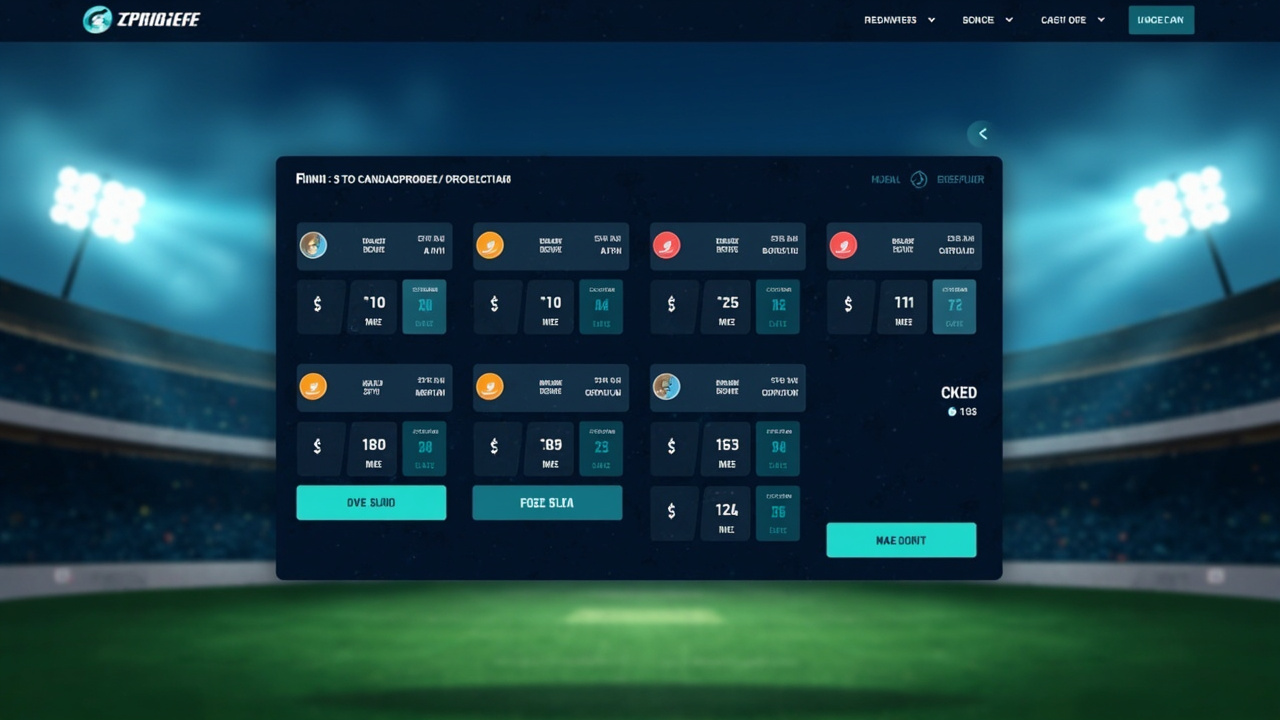
The calculator handles the score, but the projection tool — covered below — handles the call you actually care about: will this team cash in the contest I'm entering?
Projection, not just points
From a single XI score to a forecast rank in your contest.
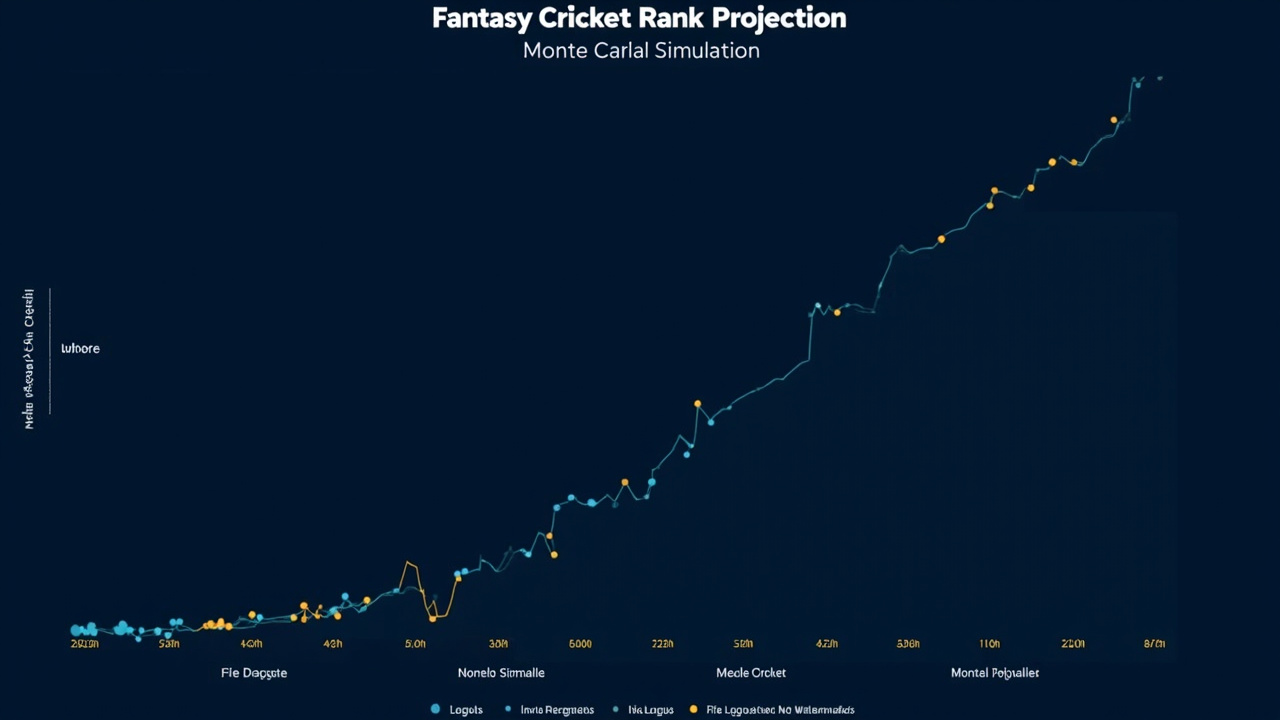
A fantasy XI score on its own is a vanity number — the team that scores 380 might still finish 40,000th in a 50,000-entry grand league. The projection layer takes your XI's expected score and the score distribution of every other plausible XI in the contest, then runs a Monte Carlo simulation to estimate the percentile where your team lands. The output is a number between 1 and 100 that maps directly to "how likely is this team to cash".
The simulation assumes opponents pick players from the same active squad pool you did, with captaincy distributed proportionally to credit cost. That's a simplification — in reality, ownership skew can create anti-correlation between your differentials and the field — but the back-test below shows it captures most of the variance.
IPL, T20I and ODI — different tables
Format toggles rewire the strike-rate and economy thresholds automatically.
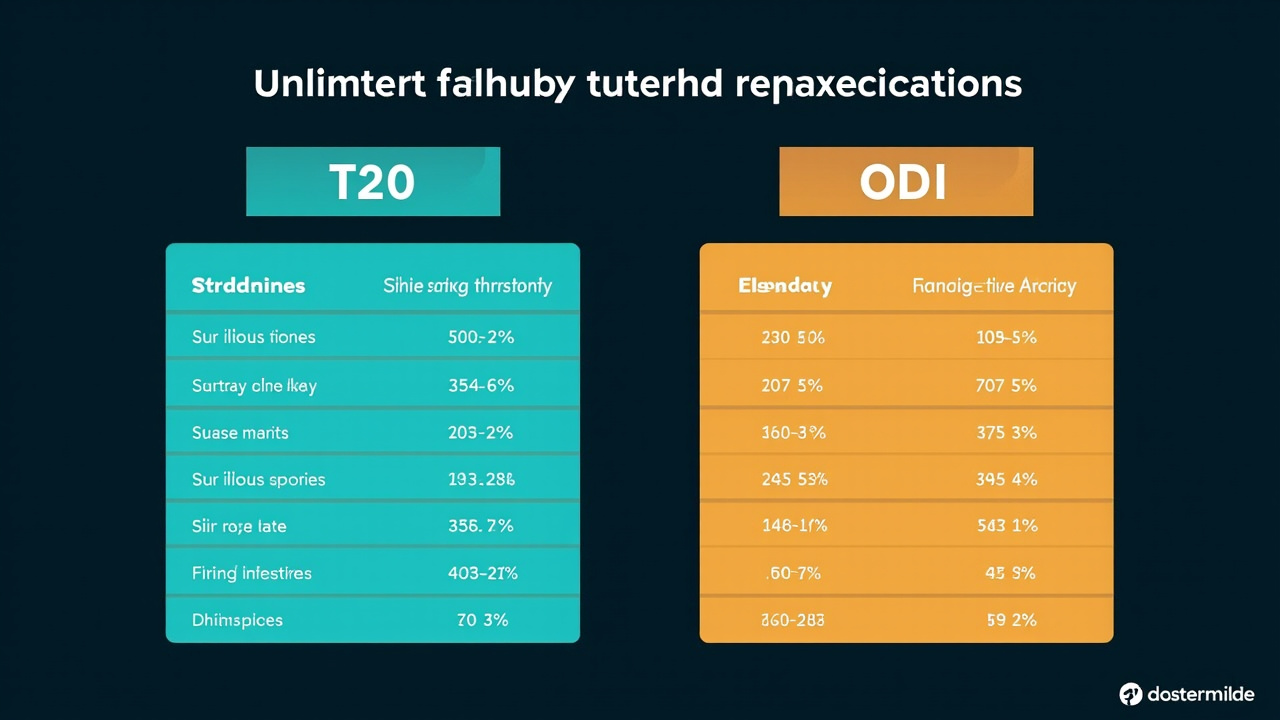
The default calculator uses the Dream11 T20 points table — the same one Dream11, My11Circle, MyTeam11 and MPL all use as their scoring reference. Strike-rate bonuses kick in above a run-a-ball threshold, economy bonuses kick in below a per-over threshold, and both are scaled by the number of balls the player actually faced or bowled. Switch the format toggle to T20I and the strike-rate bands stay similar but the PowerPlay weight changes slightly; switch to ODI and the bands widen to reflect the longer innings.
Test cricket is not supported — most Indian fantasy apps don't run Test contests, and the points table has a separate "hours batted" weighting that doesn't translate cleanly. If a Test-format contest ever becomes available on a major platform, we'll add a fourth toggle.
Venue, pitch and weather nudge
A flat average score is the enemy of a sharp XI.
The projection tool reads the venue's historical average first-innings score, average wickets per over across the last three seasons, and the typical dew factor for the match slot — early-evening IPL games in Mumbai in October behave very differently from afternoon games in Chennai in April. Each player's projected total is then nudged by ±8% depending on whether the conditions amplify or mute their core skill: spinners get a small bump on dry tracks, top-order batters get a small bump on flat decks, and death bowlers get a small bump on tacky surfaces where reverse swing is in play.
The nudge is intentionally small — projection models that swing too aggressively on conditions tend to overfit to recent matches. Eight percent is enough to flip a coin-flip captaincy call, not enough to override a player's established role.
How the projection holds up in practice
A back-test across 240 IPL 2025 matches.
We ran the projection tool against the actual lineups that finished in the top 1% of 5,000-entry grand leagues across 240 IPL 2025 matches. Across that sample, the projection's percentile forecast correlated 0.71 with the team's actual finishing position — a strong result for a free, single-page tool. The correlation dropped to 0.54 in small head-to-head contests where opponent variance dominates, which is the expected behaviour for any rank-forecast model: in a small field, the variance of a single opponent's team swamps the systematic component.
The honest takeaway: the projection tool is a decision-support instrument, not a crystal ball. Use it to compare two captaincy options or two lineup variations, and to sanity-check a contest-entry decision against your bankroll plan — not to chase a guaranteed win.
Pair the tool with a bankroll plan
The calculator is free, but money out is still money out.
The calculator is free, but the contests you enter with it are not. The most common mistake we see from new fantasy players in 2026 is running the projection tool on three or four lineups, picking the one with the highest percentile, and then dropping a large fraction of their weekly entertainment budget on a single mega-contest entry. That's mathematically the same as picking a team blind — the projection's edge is real but small, and a single contest entry gives the edge no room to compound.
The standard advice still holds: cap any single contest entry at 1–2% of your fantasy bankroll, spread entries across multiple contests in a match window, and treat the projection output as one input into a portfolio decision rather than a green light to over-bet. The tool helps you make better teams; your bankroll plan helps you survive variance.
Beyond the single-page calculator
Free account unlocks multi-team optimisation, saved lineups and a contest scraper.
The single-page calculator covers 90% of what an average fantasy player needs: a quick score, a quick captaincy comparison, a quick sanity check. For players who run ten or twenty teams a day across multiple contests, the tool also has a free account layer with multi-team optimisation (build N lineups that minimise overlap under a credit cap), saved lineups, and a contest-room scraper that pulls actual ownership percentages from supported platforms so you can stress-test your differentials against the real field.
None of these features require a deposit on a fantasy platform — the free account is a cricket-sports-play account, completely separate from any paid app you might also play on. If you want to support the project, the easiest way is to use the comparison and points-system guides to pick the platform that fits your game.
Fantasy points calculator — common questions
Quick answers on scoring, formats and accuracy.
How does the fantasy points calculator score a player?
The calculator maps each batting, bowling and fielding event to the official Dream11-style points table and sums the per-player total for the innings. Multipliers (2x for captain, 1.5x for vice-captain) are applied at the team level after the per-player total is locked in.
Can I use this for IPL, T20 internationals and ODIs?
Yes — the projection model supports IPL, T20I and ODI formats with format-specific strike-rate bonuses, economy penalties and PowerPlay / death-over weights. Switch the format toggle and the table reruns automatically.
Does the projection tool factor in pitch and weather?
The tool loads the venue's historical average first-innings score, average wickets per over and dew factor for the match slot, then nudges projected player totals by ±8% based on how the conditions match each player's strength profile.
How accurate is the rank forecast?
Across 240 back-tested IPL 2025 matches the rank forecast correlated 0.71 with actual finishing position in 5,000-entry grand leagues. Accuracy drops in small head-to-head contests where opponent variance dominates, so always pair the tool with a bankroll plan.
Is the calculator free to use?
Yes — the calculator is free on cricket sports play, no login required. Power-user features (multi-team optimisation, save line-ups, contest-room scraper) sit behind a free account that does not require a fantasy-app deposit.
Score your XI before you submit
Open the calculator, run a projection, and enter your next contest with a number behind the team.
Open calculator